
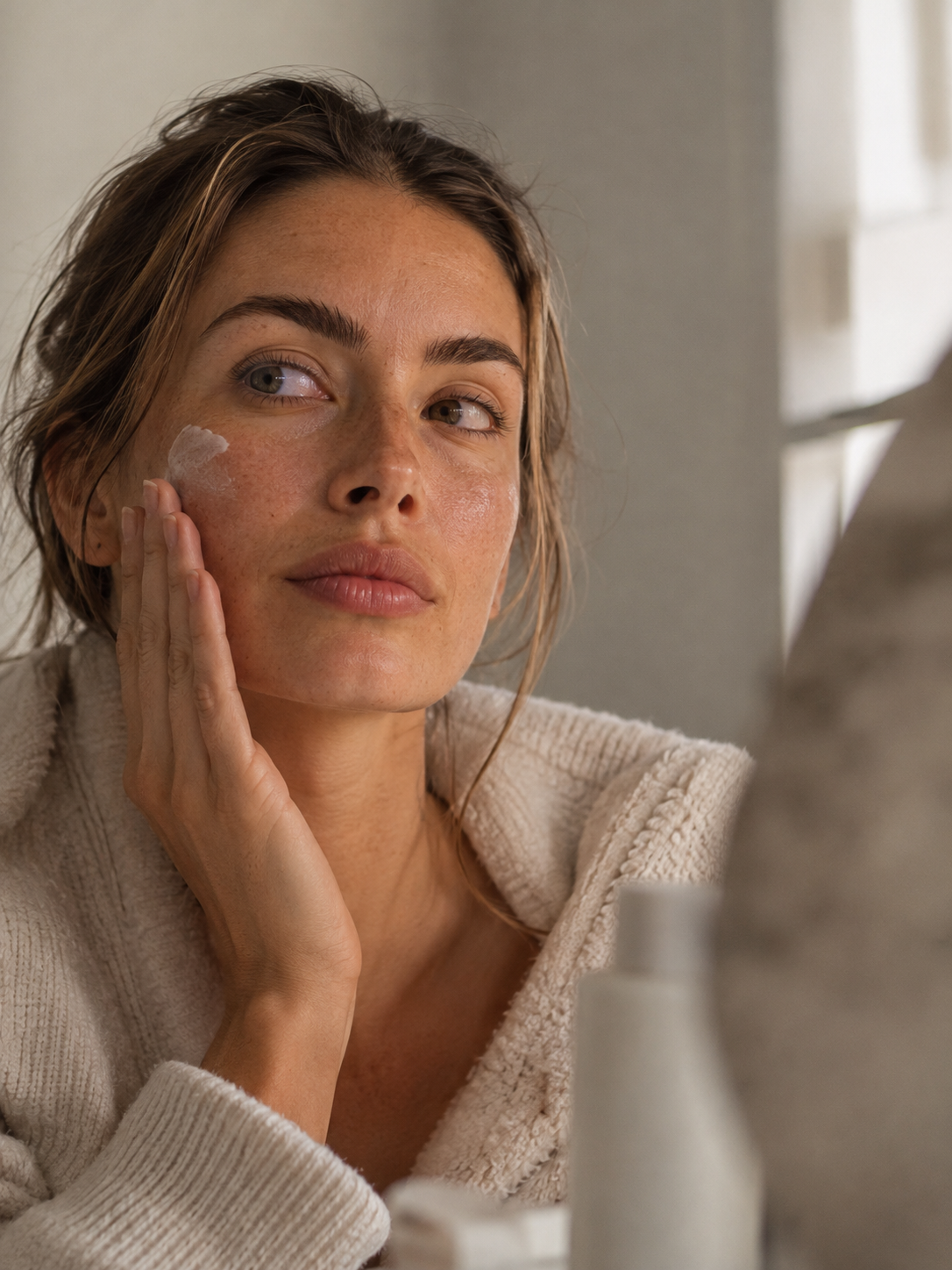
Have you noticed your skin behaving a little differently lately?
Maybe your usual moisturiser doesn't seem to be doing much. Your make-up isn't sitting quite as nicely, your skin feels a bit tighter after cleansing, or you're suddenly getting dry patches where you didn't have them before.
And naturally, you're wondering whether you need a new serum, a different moisturiser or some sort of skin treatment to sort it all out.
Before you start adding things to your basket, let's take a step back.
Our skin responds to its environment, and changes in temperature, humidity, sun exposure and the products we use can all influence how it looks and feels.
As we move through the seasons here in the UK, our routines and surroundings change too. We might spend more time indoors with the heating on, experience cooler or windier days, or notice that our skin feels different from how it did a few weeks ago.
But here's the important bit: not every change in your skin means you need a new product or treatment.
Sometimes it's about adjusting what you're already doing. Sometimes your skin needs a little extra support. And sometimes, it's worth getting some advice to work out what's actually going on.
So, let's look at what might be happening and how to give your skin what it needs… without overcomplicating things.
Why does your skin change with the seasons?
Your skin has a protective outer layer called the skin barrier. One of its main jobs is to help retain moisture while protecting your skin from external irritants.
Changes in your environment can affect how well your skin maintains that balance.
Temperature and humidity: Cooler air and lower humidity can contribute to moisture loss, leaving skin feeling dry, tight or rough.
Indoor heating: Spending more time in centrally heated rooms can expose your skin to drier air, which may make dryness more noticeable.
Wind and weather: Cold or windy conditions can leave exposed skin feeling uncomfortable, particularly if your skin is already dry or sensitive.
Changes to your routine: You might be taking hotter showers, exfoliating more often or switching products in response to how your skin looks. Sometimes, these changes can add to the problem rather than solve it.
If you already experience conditions such as eczema or rosacea, changes in weather and temperature may also aggravate your symptoms.
Of course, not everyone's skin reacts in the same way. You might notice very little difference between seasons, while someone else finds their skin needs a bit more attention.
The trick is to pay attention to what your own skin is telling you.
Five signs your skin might need a little extra support
Your skin won't necessarily need a completely different routine just because the seasons are changing. But there are a few signs that your current products or habits might not be meeting its needs.
1. Your skin feels tight after cleansing
Your face shouldn't feel uncomfortably tight or stripped every time you wash it.
If it does, your cleanser may be too harsh for your skin, particularly if you're already experiencing dryness.
Consider switching to a gentle cleanser that removes make-up, SPF and everyday impurities without leaving your skin feeling squeaky clean.
2. Your make-up is clinging to dry patches
Foundation that suddenly looks patchy or settles into areas of flaking can be a sign that your skin needs more hydration and moisture.
Before buying a new foundation, take a look at your skincare routine. A suitable moisturiser and a little patience may help more than another make-up product.
3. Products that used to work are suddenly stinging
If your usual serum or exfoliant has started to sting, burn or leave your skin feeling irritated, don't automatically assume you need something stronger.
Your skin may be struggling to tolerate your current routine.
Pause products that appear to be irritating it, simplify your routine and seek professional advice if the discomfort persists or your skin becomes inflamed.
4. Your skin looks dull and feels rough
When the skin's surface is dry or uneven, it can look less smooth and radiant.
It's tempting to reach for a strong exfoliant to bring back that glow, but aggressive exfoliation isn't always the answer. If your skin is already dry or sensitive, it may need some time and a more supportive routine first.
5. Your moisturiser doesn't seem to last
If your skin feels comfortable after moisturising but becomes dry again a few hours later, you may need a more nourishing formula.
Look for ingredients such as glycerin, hyaluronic acid and ceramides. These can help attract moisture, soften the skin and support its protective barrier.
The right choice will depend on your skin type, so there's no need to buy the richest cream you can find just because the weather has changed.
How to adapt your skincare routine
Here's where I'd start: keep the routine simple, focus on hydration and give your skin a chance to settle.
You don't need ten steps or a completely new collection of products.
Step 1: Cleanse gently
Use a cleanser that removes the day's build-up without leaving your skin feeling dry or tight.
Wash with lukewarm rather than hot water, and avoid scrubbing your face with rough cloths or exfoliating tools.
Step 2: Focus on hydration
Ingredients such as glycerin and hyaluronic acid help attract water to the skin's surface.
They can be useful additions if your skin is feeling dehydrated, but remember that hydration and moisturisation aren't quite the same thing. Following your hydrating serum with a suitable moisturiser helps reduce moisture loss.
Step 3: Don't skip moisturiser
Your moisturiser helps soften the skin and support its barrier.
If your usual lightweight lotion isn't keeping your skin comfortable, you might prefer a richer cream as the weather changes.
Ceramides are worth looking out for because they're naturally found in the skin barrier and help maintain its structure.
You don't necessarily need a different day and night routine, though. Start with what your skin is telling you it needs.
Step 4: Be sensible with active ingredients
Retinoids and exfoliating acids can be useful for certain skin concerns, but they can also cause irritation, particularly if your skin is already struggling.
You don't automatically need to stop using every active ingredient when the seasons change. Instead, pay attention to how your skin responds.
If it's sore, peeling or unusually sensitive, consider simplifying your routine and pausing products that may be contributing to the irritation. If symptoms persist, seek advice from a qualified healthcare professional.
Step 5: Keep wearing SPF
I know it's tempting to forget about sunscreen when the sky is grey and the days are shorter.
But UV exposure doesn't disappear when summer ends. Broad-spectrum sun protection remains an important part of looking after your skin throughout the year.
Think of SPF as part of your everyday routine, not something reserved for holidays and sunny afternoons.
Should you have a facial or chemical peel?
This is where things get a little more individual.
You might have heard that autumn and winter are good times to focus on skin treatments. There can be advantages to planning certain treatments during these months, but the right timing depends on the treatment itself, your skin and how well you can follow the necessary aftercare.
For example, if your skin is currently dry, irritated or unusually sensitive, jumping straight into an exfoliating treatment may not be the best first step.
A chemical peel such as BioRePeel may be suitable for certain concerns, including uneven tone, texture or congestion, but suitability needs to be assessed individually. It isn't automatically the answer to dryness, and it can still cause side effects such as redness, dryness or flaking.
Microneedling may be worth discussing if you're concerned about skin texture or overall skin quality, but again, your skin needs to be assessed first.
Sometimes, the best starting point is simply improving your skincare routine and allowing your skin to settle before considering a treatment.
The order matters: understand what your skin needs first, then decide whether a treatment is appropriate.
When should you get professional advice?
If your skin has become persistently dry, uncomfortable, irritated or unusually reactive, it can be helpful to have someone assess what's going on.
At GLO Aesthetics in Rustington, a skin consultation is an opportunity to discuss your concerns, look at your current skincare routine and explore the options that may be suitable for you.
That might involve adjusting your skincare, discussing a treatment or recommending that you seek medical advice if your symptoms suggest an underlying skin condition.
There's no need to book a treatment just because your skin isn't looking its best. Sometimes a few changes at home are enough.
Your skin doesn't need a whole new routine every season
It's easy to assume that when our skin changes, we need to buy something new to fix it.
But before adding another serum, investing in an expensive moisturiser or booking a treatment, take a step back and look at the basics.
Is your cleanser gentle enough? Are you moisturising properly? Have you been overdoing the exfoliation? Is your skin asking for a little less and a little more support?
Small, consistent changes can make a difference, and there's no need to overhaul everything at once.
And if you're not sure what your skin needs, that's absolutely fine too.
If your skin has been feeling a little different lately, let's work out why.
Get in touch with GLO Aesthetics in Rustington to arrange a consultation. We'll talk through your concerns and work out what may be most appropriate for your skin.
Bianca x